How Can You Enforce the Terms of Your Divorce Decree?
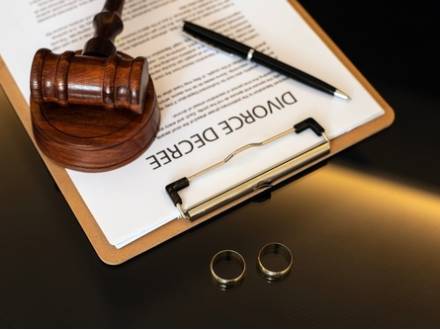 When a divorce is finalized, the court enters a divorce decree that both parties are legally required to follow. But having a court order and actually getting the other party to follow it are two very different things. If your ex-spouse is not paying child support, ignoring a property division order, violating a parenting agreement, or failing to pay spousal support, you have legal options to force compliance. If you are dealing with an uncooperative ex in 2026, the Joliet, IL post-divorce enforcement lawyers at Reeder & Brown, P.C. can help you take action.
What Are the Most Common Violations of a Divorce Decree?
Violations come in many forms, and some are more obvious than others. Knowing what counts as a violation helps you understand when it is time to take legal action.
Common violations include:
-
Failing to pay child support on time or at all
-
Not following the agreed parenting time schedule or denying the other parent their scheduled time
-
Refusing to transfer property or assets as ordered
-
Failing to pay spousal maintenance as required
-
Not refinancing a mortgage or removing the other spouse from a debt as required
-
Violating restrictions on relocating with the children
-
Failing to maintain the required health insurance for the children
Any of these situations gives you grounds to go back to court and ask for enforcement.
What Is a Motion for Rule to Show Cause in a Divorce Decree Enforcement Case?
A motion for rule to show cause is one of the most common tools used to enforce a divorce decree in Illinois. When you file this motion, you are asking the court to order the other party to appear and explain why they have not complied with the decree. If the court finds that the party willfully failed to comply with the order without sufficient justification, it may hold that person in contempt.
Under 750 ILCS 5/511, Illinois courts have broad authority to enforce their own orders. A finding of contempt can result in fines, the requirement to pay the other party's attorney fees, and, in some cases, jail time. The threat of these consequences is often enough to bring a non-compliant party back into line.
How Can You Enforce Child Support Orders in Illinois?
Child support enforcement has its own set of tools that go beyond what is available for other types of violations. Illinois law and federal law both provide strong mechanisms for collecting unpaid child support.
If your ex is not paying child support, the court can order wage garnishment, which means the support is taken directly from their paycheck before they even receive it. The court can also suspend their driver's license, professional licenses, or recreational licenses until they pay what is owed. Tax refunds can be intercepted and applied to overdue support. In serious cases of non-payment, the court can hold the non-paying parent in contempt and order jail time.
Can the Divorce Decree Be Modified if Circumstances Have Changed?
Enforcement and modification are two different things, but they sometimes come up together. If the other party claims they cannot comply because their circumstances have changed, they need to go through the proper legal process to request a modification. They cannot simply stop following the decree on their own.
Under 750 ILCS 5/510, a party seeking to modify child support or maintenance has to show a substantial change in circumstances since the last order was entered. Until a modification is granted by the court, the existing order remains in effect and must be followed. Refusing to comply while waiting for a modification to be approved is still a violation.
What if the Other Party Claims They Cannot Afford to Pay After Divorce?
Financial hardship is a common excuse offered by parties who are not complying with support orders. But the inability to pay has to be proven in court, not just claimed. If your ex says they cannot pay, they need to provide financial documentation and go through the proper process to request a modification. Until the court officially changes the order, they are still obligated to pay what was ordered, and you are still entitled to enforce the original decree.
Schedule a Free Consultation With Our Will County, IL Divorce Attorneys
At Reeder & Brown, P.C., our Joliet, IL post-divorce enforcement lawyers bring over 30 years of combined experience to every case. That background gives us a unique understanding of how courts work and what it takes to get results. We are focused on honesty, integrity, and great client service at every step. Contact us by calling 815-885-5980 to schedule your free consultation today.

Fill out the form below to schedule a consultation.
 The use of the Internet or this form for communication with the firm or any individual member of the firm does not establish an attorney-client relationship. Confidential or time-sensitive information should not be sent through this form.
I have read and understand the Disclaimer and Privacy Policy.


From our office in Joliet, Illinois we serve the communities of Plainfield, Lockport, Crest Hill, New Lenox, Mokena, Romeoville, Homer Glen, Bolingbrook, Naperville, Aurora and Will County.
Results listed are not a guarantee or indication of future case results.
58 North Chicago Street, Suite 404, Joliet, IL 60432815-885-5980